

Our comprehensive programme empowers educators with the tools and confidence to lead sensitive conversations about bereavement in safe, supportive learning environments.
Whether you’re a school leader seeking whole-school training, a teacher looking for lesson plans, or a university preparing the next generation of educators, Lessons in Life and Loss is here to support you and your learners. Please complete an enquiry form and we will aim to reply to you within 24 hours.


Our comprehensive approach equips educators with the knowledge, skills, and confidence to support bereaved pupils effectively and sensitively.

Learn to establish supportive classroom environments where proactive bereavement education can become a part of your curriculum.
Comprehensive training programme designed specifically for schools and trainee teachers.


Access to curated materials, guidance documents, and tools to support your educational community.

Our comprehensive approach equips educators with the knowledge, skills, and confidence to support bereaved pupils effectively and sensitively.
Learn to establish supportive classroom environments where proactive bereavement education can become a part of your curriculum.
Comprehensive training programme designed specifically for schools and trainee teachers.
Access to curated materials, guidance documents, and tools to support your educational community.

A MESSAGE FROM OUR FOUNDER, ALKA TOWNEND
What distinguishes ‘Lessons in Life and Loss’ as a leading provider of grief training within your organisation?
Lessons in Life and Loss is based on bereavement research and first-hand findings from classroom studies with children. The training programme has been refined through feedback from academics, school staff and trainee teachers. It also incorporates insights from bereaved children and young people, helping educators understand their critical role in providing support.
Lessons in Life and Loss has been created by an experienced teacher with direct classroom experience in both primary and secondary schools. The programme stands out by prioritising emotional literacy and offering a range of interactive activities, reflective discussions, and age-appropriate resources designed to foster resilience and empathy in students. It aligns with RSHE policy guidance, and can be applied across the wider curriculum to gently and gradually support children’s understanding of death and bereavement. The programme is highly adaptable to the needs and ethos of your school; for example, activities can be modified for younger children using storytelling and art, while older students may take part in guided group discussions or personal reflection exercises. These unique methods ensure Lessons in Life and Loss is both practical and effective for diverse classroom settings.
Rooted in a heartfelt commitment to English education, a key element of our programme centres on carefully curated fiction exploring themes of loss. Our programme aims to integrate diverse voices, ensuring students encounter a wide range of perspectives on the experience of death and grieving. These texts invite meaningful classroom dialogue, nurturing empathy, emotional literacy, and reflective thinking across the curriculum. For example, students participate in guided discussions and creative memorisation activities that encourage them to relate the characters’ experiences to their own lives, making the exploration of grief both personal and relevant.
We believe it is vital for you to have some background knowledge related to the experience of childhood bereavement, including common emotional responses—such as sadness, anxiety, or anger—and behavioural changes like withdrawal, irritability, or difficulty concentrating. Understanding these reactions can help you recognise how bereavement may present in children and young people at different developmental stages. We also offer guidance on when to consider seeking external support, especially if in-school assistance is not sufficient to meet a child's needs. In addition, we share insights into the positive impact of school interventions for bereaved children. For instance, offering a quiet space for reflection or allowing flexible deadlines can significantly support bereaved students as they navigate their return to school. These strategies are often straightforward yet highly effective in promoting wellbeing.
We recognise the importance of working respectfully with families on a sensitive topic such as grief. Our programme encompasses advice on working with diverse communities and creating an accessible bereavement policy to support the individual ethos of your setting.
Our founder Alka Townend has been invited to speak at global conferences to share her expertise and training programme with educators working across education sectors. This has included, the Practical Pedagogy conference in Cologne, the IST Teach Innovate conference in Toulouse and the ELSA conference in Paris. Subsequently, Alka was invited as a guest speaker on the International Schools Podcast:
Lorem Ipsum is simply dummy text of the printing and typesetting industry. Lorem Ipsum has been the industry’s standard dummy text ever since the 1500s, when an unknown printer took a galley of type and scrambled it to make a type specimen book.
Lorem Ipsum is simply dummy text of the printing and typesetting industry. Lorem Ipsum has been the industry’s standard dummy text ever since the 1500s, when an unknown printer took a galley of type and scrambled it to make a type specimen book.
Lorem Ipsum is simply dummy text of the printing and typesetting industry. Lorem Ipsum has been the industry’s standard dummy text ever since the 1500s, when an unknown printer took a galley of type and scrambled it to make a type specimen book.
Lorem Ipsum is simply dummy text of the printing and typesetting industry. Lorem Ipsum has been the industry’s standard dummy text ever since the 1500s, when an unknown printer took a galley of type and scrambled it to make a type specimen book.

Below are questions that we have encountered many times!
Alka has answered these with reference to research and her own experiences as a bereavement specialist
A recent study found that 50.8% of all children are bereaved of a parent, sibling, grandparent or other close family member by age 8 and this rises to 62% by age 10 (Livings et al; 2023). Child Bereavement UK (2017) indicate that approximately one child in every class in Britain has been bereaved of a parent or sibling which suggests that many school staff will be faced with offering support to a bereaved pupil at some point during their career. Childhood bereavement research consistently emphasises that bereavement can be a disruptive, stress-inducing event that may be associated with a range of negative consequences. The Lessons in Life and Loss Training programme, provides a deeper understanding of how children and young people experience grief to support educators in assessing which support mechanism might be appropriate. These interventions do not need to be complex and can be utilised proactively so that everyone in your school community is equipped with the appropriate skills to support children in being prepared for an inevitable life experience.
Considering that children spend a substantial amount of their waking hours in school, research indicates that a school’s ethos has the potential to strengthen or weaken the emotional well-being of its pupils (Ribbens, McCarthy and Jessop, 2005). The Lessons in Life and Loss training programme is designed to respond to this reality, equipping educators to support children in navigating the notion of death in a sensitive, compassionate and safe environment, allowing for age-appropriate understanding, and diverse beliefs.
The Lessons in Life and Loss programme also encompasses principles that will assist educators in supporting other forms of family instability such as parental marital dissolution, incarceration, and residential displacement. Our training programme also supports educators in understanding the significance of pet loss as this is often children’s first experience of death. Research has shown that unacknowledged and unsupported pet loss can significantly affect children’s wellbeing, (Schmidt et al; 2017).
A family’s ability to support a grieving child may be limited due to their own grief, but offering the child someone outside the home to talk to can help reduce negative psychosocial effects. Schools are well-placed to provide this support when families cannot (Balk, 2001; Dyregrv, 2008). The Lessons in Life and Loss programme focuses on fostering open communication between home and school.
The UK is a culturally diverse country with 86% of residents from white ethnic groups, 7.5% from Asian ethnic groups, 3.3% from black ethnic groups and 4.2% other (GOV.UK, 2020b). The Lessons in Life and Loss training programme offers tailored advice on cultural differences allowing for the profound context that religion might play in individual responses to death.
This is not an uncommon concern, research suggests that teachers might refrain from grief interventions with a bereaved child because they are worried about saying the wrong thing and/or they may have sensitivity related to their own personal experiences of loss (Potts, 2013; Holland, 2015; Chadwick 2012). The Lessons in Life and Loss training programme, advocates for proactive grief literacy, so that when there is a death in your community, school staff and peer groups are prepared to support the bereaved with appropriate loss language and compassion. Our programme also offers follow-up support and advice for school staff after the training.
Research has shown that failing to talk to children about the death can lead to prolonged grief (Martinez-Caballero, et al. 2023). Story books are already established as an effective resource in the in the English Curriculum and the Lessons in Life and Loss training programme encompasses the power of story as a stimulus for discussion and activities within the existing curriculum and across all educational phases.
A study conducted with schoolteachers recommended that teacher training providers consider integrating bereavement support into their programmes to better prepare new entrants to the profession in providing pastoral and well-being support (Steele & Edmunds, 2021). While this is not mandatory, some universities, such as the University of Sussex, include bereavement training in their initial teacher education curriculum which is delivered by our founder, Alka Townend. The Lessons in Life and Loss training programme has been delivered to over 300 trainee teachers over the last few years (see testimonials) and they consistently feedback how much more confident they feel in approaching emotional wellbeing in their future classrooms.
The introductory training session is 2 hours and then we also offer another 2-hour follow-up workshop to support with specific lesson planning for different groups of learners and to support/review your school bereavement policy. However, we are also happy to offer a bespoke service depending on your needs, so please complete an initial enquiry form and you will receive a reply within 24 hours.
- I thought Alka was very good. Clear advice and good links to other support.
- Explaining use of language was very helpful plus the suggestion of bereavement policy.
- It would be good for us to have this training in advance, so that we know what to do in future rather than being reactive (when a death occurs).
I learned a lot in this session and was able to examine my own attitudes towards grief and bereavement. I came away with a lot of resources and practical information to use in my school.
- It was amazing, so useful, wonderfully delivered and truly so impactful. It was such an important session we wished it could have been longer. It is such an important topic that needs to be spoken about.
- I now feel I can offer support with great listening skills and sympathy. It helped me to understand what a compassionate policy should look like in a future school. My toolkit has been really enhanced by this. Please have all students do this seminar!
- I gained practical guidance on what to do- such as what information I need to know, the best language to use, and (external parties) who I could ask for help and guidance from.
- I learned that grief can show itself in so many ways and taking the time to let that student know you are there if they need you is so important.
- My key takeaways were to normalise death, use concrete language, let them (children) reminisce about the deceased, let them know it’s okay, and just be there for them.
- Really highlighted the importance of this in schools and has equipped us with the tools we need to be proactive with children dealing with grief. Although a sensitive topic, it was spoken about clearly and in a gentle way. This training should be mandatory for all educators.
- Very helpful and very interesting. Alka was supportive and her guidance was incredible. The book recommendations/advice were also great.
- I wish we had this training prior to our school placement so we would utilise the skills and signpost staff.
- Amazing 10 /10!
- Would like to see this training in schools.
- Great sensitivity to audience/participants.
- Good practical resources and tips.
- From this training I now feel more confident in discussing death in a sensitive way.
- I now recognise the importance of using the correct vocabulary (with children) to avoid confusion.
- Such a helpful session, I now feel more confident to talk to children about grief.
- This training is vital as loss is an inevitable aspect of life and can be a different experience for everyone.
- This is such an important topic, and I truly appreciate your thorough research, Alka. Your insights and practical examples have greatly helped me understand how to emotionally support children and be there for them during difficult times. Thank you for sharing your profound knowledge with us!
- Excellent = "What a great presenter. So much charisma, such an important topic that should be part of every school’s curriculum. Thank you for sharing you work with us
I had the privilege of participating in Alka’s workshop on navigating grief with children. Her innovative use of literature to open understanding and engagement with such a sensitive topic was truly inspiring. Based on this experience, I invited Alka to join the International Schools Podcast to share her work more widely. Her philosophy is grounded in deep humanity and a thoughtful ability to create structures that help school communities navigate the complexities of grief across cultures with sensitivity and care.

Losing a pet is losing family. We provide gentle guidance and resources to help children and young people understand, grief, and cherish the memories of their beloved companions.
Recognising the love and connection we share with pets.
Activities to memorise and celebrate treasured pets.
Pet loss is a common first experience of death for many children.
Normalising grief and providing gentle support for all ages.
Whether you’re a school leader seeking whole-school training, a teacher looking for lesson plans, or a university preparing the next generation of educators, Lessons in Life and Loss is here to support you and your learners. Please complete an enquiry form and we will aim to reply to you within 24 hours.


Lessons in Life and Loss has been created by an experienced educator, the programme prioritises emotional literacy and can be adapted to meet the needs of diverse classrooms/individual pupil needs. In July 2025, the government published new guidance for the RSHE curriculum: Relationships Education, Relationships and Sex Education and Health Education guidance. This has been a significant step forward in:

Developing a clear bereavement policy provides valuable guidance and reassurance for school staff when faced with a death in the school community. Such a policy helps ensure a consistent, sensitive, and effective approach to supporting bereaved students and colleagues. Input from all school staff, governors, parents/carers and other key figures in your community is essential when creating your policy. At Lessons in Life and Loss – we can offer expert help and guidance in writing your policy as part of our follow-up training support. Other agencies that may be helpful include, Cruse Bereavement Care, Winston’s Wish and Child Bereavement UK.
Below is some basic guidance outlining the key components to include in a bereavement policy, such as communication protocols, support resources, and proactive approaches to loss, to help you make a strong start in constructing a policy tailored to your school’s needs. We strongly advise that you consult with key members of your school community when constructing your policy.
For those seeking further support, our training options offer in-depth advice and policy review, covering best practices, real-life case studies, and bespoke guidance to ensure your bereavement policy is both effective and sensitive to your school community.

Pet loss is often a child’s first experience of death. It is helpful for schools to know when a child has lost a pet at home. With this knowledge, educators can offer support in the classroom and better understand why a learner may be disengaged or upset. When teachers acknowledge pet loss, it can make a real difference to a child. Opening up these conversations allows children to share their experiences and empathise with one another. For example, a teacher might gently ask if anyone would like to talk about the loss of a pet, helping children realise they are not alone in their feelings.

Our much-loved sassy, funny and greedy Pomeranian! No matter how gloomy we felt, she always made us smile

Our adorable, clever and gentle Shetland Sheepdog. He could smile, dance and sing! Lui the singing Shetland Sheepdog (Sheltie)
If you would like to honour your pet, please email us a photo along with a brief memory at [email protected]
We will add your photos to our website to memorise the important place they held in your family.
Like many of you, our founder, Alka, loves animals and firmly believes in the therapeutic benefits that pets can bring. Dogs can encourage more empathy in educational environments and encourage young people to think of ways to look after the dog and each other. Many schools now have dogs, and their presence can be truly transformational.
For example, a school dog:
Please note: Please ensure you are fully compliant before introducing a dog into your school environment: Best Practice Guidelines – National School Dog Alliance

Welcome to ‘The Grief Brief’ for September 2025.
This will be updated every half-term.
Welcome
As we step into September, I know you’re all busy welcoming students back and settling into the new academic year. Our classrooms are filled with young people from a variety of backgrounds, each bringing their unique stories and experiences.
Some pupils may have experienced the loss of a loved one during the Summer break. It’s important to be mindful that such experiences can affect their wellbeing and engagement at school;
As my children return to university, I find myself entering a busy and exciting season at work, with several significant events on the horizon. One of the highlights this month is the Bereavement in Education conference I’ll be hosting on 17th September at the University of Sussex, alongside colleagues from the NHS and the Demelza Charity. The conference is designed for educators and professionals interested in bereavement support and will focus on how we can best support both students and staff through experiences of loss. Attendees will have the opportunity to learn from expert speakers and take part in discussions on best practices and practical strategies. We will also be celebrating the inclusion of bereavement in the new RSHE curriculum! (Relationships Education, Relationships and Sex Education and Health Education guidance
I’m looking forward to sharing updates and photos from the event with you soon.
In addition to the conference, I continue to invest in my own personal development, regularly participating in training that informs and enhances my own Lessons in Life and Loss programme. Navigating these transitions – both at home and at work – reminds me of the importance of ongoing learning and support, and I hope to bring fresh insights to you in the next few months.
As an English Education lecturer, I am passionate about the power of children’s literature to facilitate meaningful conversations about emotions. Picture books are valuable for learners of all ages, including adults. In my training sessions, I have introduced picture books to secondary teachers, who have successfully used them with KS3 and older students. For example, one teacher reported that using a picture book sparked thoughtful discussions about empathy and resilience among Year 9 students. Building on these positive experiences, I have curated a selection of picture books that address themes of bereavement and emotional growth. The following recommendations are intended for teachers and curriculum leaders who are seeking resources to enrich their work with students. Below you will see my bereavement themed book recommendations for educators to consider incorporating within their curriculum.
Finally, you will notice that I have included a pet loss page on the website, if you would like to memorise a pet then please feel free to send in a photo with a brief sentence of what made them special to you. Holding on to treasured memories and sharing these with others is a way of managing our grief and supporting each other.
Thank you for reading to the end! Let’s work together to ensure every student feels supported, whatever they’re facing this term.
Best wishes
Alka
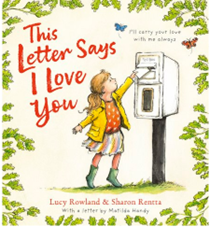

A heartfelt picture book about celebrating and remembering loved ones. Keep sharing the things that you wish you could say.Our letters to loved ones will all find their way . . . Matilda misses her grandma a lot and wishes she could talk to her again. Some days she feels sad. And some days she remembers all the happy memories they shared together. But what if there was still a way to tell her grandma just how much she loves her? After all, the ones we love are always with us. Based on a true story, this beautiful picture book shows how we can stay connected to those we’ve lost by writing them letters. Matilda’s idea of creating a post box to send letters to those who have passed on has taken root across the country, and now children and adults can post letters to their loved ones in one of her special white post boxes.
Set within a lively, artistic family, this novel explores how a young protagonist navigates grief following the decline of her beloved grandmother, weaving her journey through the lens of cultural traditions and family heritage. By delving into the complexities of loss within a diasporic community, the story offers a nuanced perspective on identity, belonging, and the ways in which cultural roots shape responses to bereavement.

Thank you for your interest in my bereavement programme for schools. Although I have spent the last 14 years training teachers on university ITE programmes, I am still at heart, a teacher. I know only too well the pressures of working in the classroom with the intensity of accountability, a packed curriculum and new policy directives. I am also aware of how hard you all work in meeting the needs of the pupils in your class including emotional wellbeing. With this in mind, I have developed a flexible training programme that I can adapt according to your requirements and the individual needs of your settings.
Before each training session, I provide you with optional pre-session materials and offer a follow-up service to support you with any curriculum and bereavement policy queries. As an experienced English lecturer. I always prioritise audience engagement by presenting challenging topics in an interactive yet sensitive way.
I have built The Lessons in Life and Loss training based on my experience as a teacher, university lecturer, researcher and bereavement counsellor for a national charity. I hope that the training programme will impact positively on your feelings about discussing death and loss with children.
I recall a teacher once saying to me “if I really have to attend more CPD, then at least give me something to challenge my thinking with effective tools that I can take back to my classroom!”
Alka is a leading voice in grief literacy within education. She has dedicated much of her academic career to supporting children and educators in navigating bereavement with empathy, clarity, and care. As a former teacher and now Emeritus Professor at the University of Sussex, Alka brings together classroom experience, academic rigour, and emotional insights gained from her bereavement volunteer role with a national grief charity. During her university career, Alka led BA undergraduate programmes and served as a Senior Lecturer in English Education. She was also the Director for Equality, Diversity and Inclusion in the School of Education and Social Work at Sussex University.
Although Alka has completed her formal tenure at Sussex University, she continues to provide bereavement training for Sussex students. Her bereavement training workshops have equipped over 300 future educators with practical tools for supporting grieving students. She also co-leads an annual bereavement conference in partnership with the NHS and the Demelza children’s hospice. In addition, Alka is a member of the Grief Education Influencing Group and contributed to the report submitted to parliament advocating for grief education to be incorporated into the curriculum. This collective endeavour proved to be very worthwhile when it was announced in July 2025 that bereavement education had been added to the guidance for RSHE Relationships Education, Relationships and Sex Education and Health Education guidance.. This new policy marks a significant step forward, recognising the crucial importance of supporting pupils through loss and grief within schools
Alka is a trained bereavement volunteer for a national charity—a role she undertook to deepen the emotional integrity of her educational work. In this capacity, she provides individual support to bereaved children, young people, and adults, offering a safe and compassionate space to explore their experiences of grief. Her work involves attentive listening, emotional guidance, and helping individuals identify strategies to manage and make sense of their loss. This practice informs and enriches her broader work in education and the training programme which remains grounded in empathy, resilience, and emotional literacy.
In 2021, Alka was delighted to win the Sussex University ‘Extra Mile’ award voted for by her students. This was in recognition of the commitment and additional support she provided to students during the pandemic.
Alka has spoken nationally and internationally on the role of teachers as emotional guides, advocating for bereavement training as a core component for in-service and trainee teachers. Her advocacy has led to increased awareness and the integration of bereavement into several teacher training programmes, thereby equipping future educators with essential skills in understanding how to embed loss and grief into their everyday curriculums. Alka advocates for proactive loss education, not only to enable educators and peer groups to offer empathetic support to the bereaved but to normalise their own experiences of grief.
Her recent appearance on the International Schools Podcast highlighted the importance of grief literacy in global education contexts: 148 – Chat with Alka Townend about Bereavement in Schools: How to Support Children and Teachers During the episode, Alka shared practical strategies for supporting grieving students and emphasised the need for school-wide grief literacy initiatives, underlining the significance of a holistic approach to bereavement support within educational settings.
Five years ago, during the Covid pandemic, Alka engaged in a research project with school leaders, exploring their perceptions, experiences and challenges related to school support for bereaved children. Findings from her study advocated for proactive approaches to school bereavement including training for teachers/trainee teachers and utilisation of strategies such as bibliotherapy as an effective strategy for discussing difficult topics in the classroom. Currently, Alka is collaborating with researchers at St Mary’s University on the ‘Love and Loss’ research project exploring how children engage with stories about loss. This work centres children’s voices in a field that too often speaks about them rather than with them—offering vital insights into how lived experience can support emotional understanding and healing.